
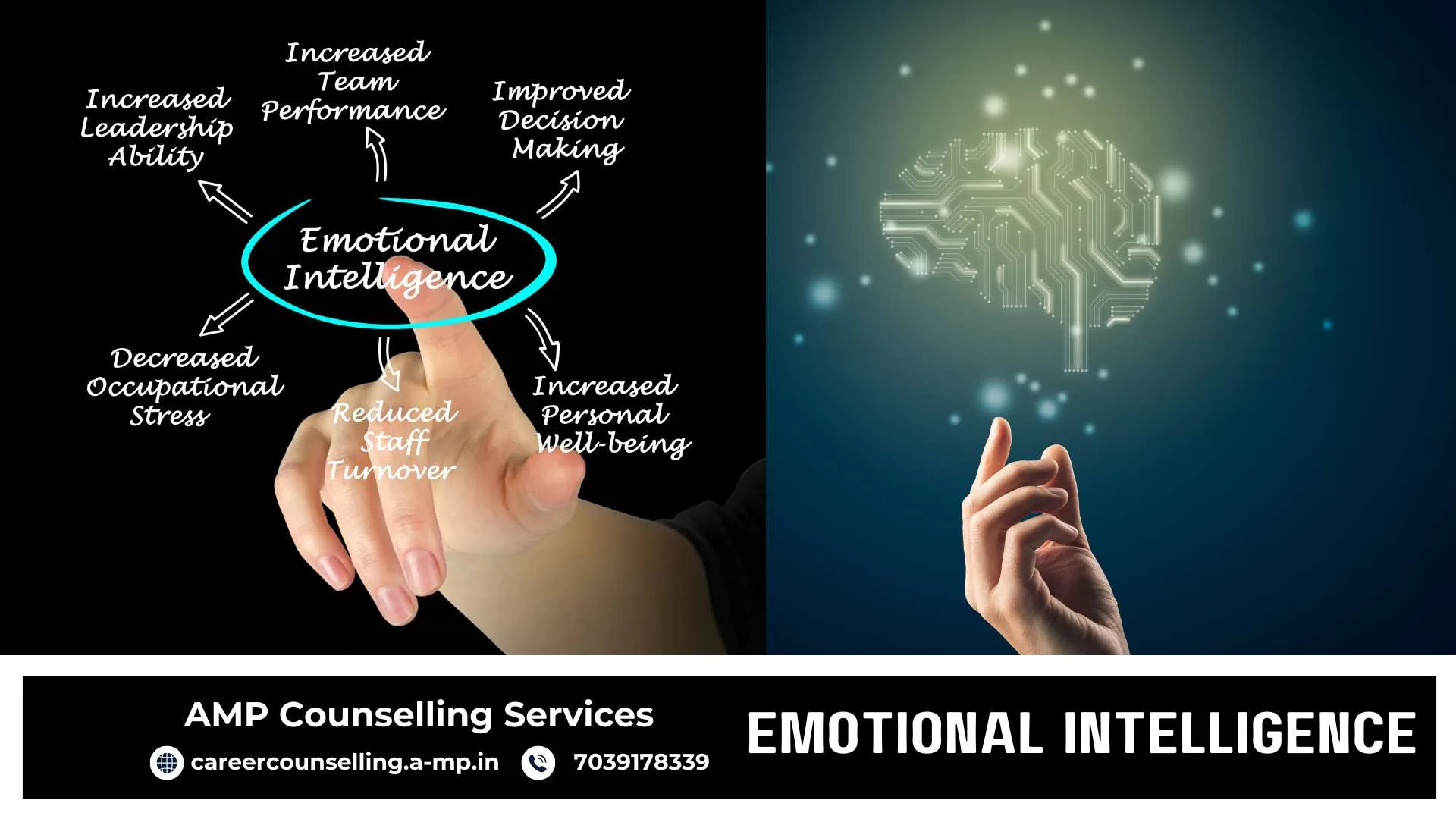
In today’s fast-paced world, success is not only about IQ or technical skills. It’s also about how well you understand yourself and connect with others. This is where emotional intelligence plays a huge role. Whether at work, in relationships, or in everyday life, developing emotional intelligence helps you stay calm, make better decisions, and build stronger bonds. Blog Owner: AMP Counselling Center
Want to enhance your emotional intelligence and improve your personal and professional life? Connect with AMP Counselling Center today. We’ll guide you in building self-awareness, empathy, and communication skills that truly make a difference.
Read More About : Baddha Padmasana (Bound Lotus Pose)
🔑 What is Emotional Intelligence?
Emotional intelligence (EI) is the ability to recognize, understand, and manage your own emotions while also being aware of others’ feelings. It’s about handling situations with empathy, balance, and confidence. People with strong emotional intelligence can stay calm under stress, communicate better, and build healthier relationships.🌿 Why Emotional Intelligence Matters
Better Relationships – Understanding others’ emotions helps you connect deeply and avoid unnecessary conflicts. Improved Decision-Making – EI allows you to stay rational even when emotions run high. Stress Management – Emotionally intelligent people cope with challenges without breaking down. Career Success – Employers value employees who can lead, collaborate, and adapt effectively.💬 Core Components of Emotional Intelligence
Self-Awareness Being aware of your emotions is the first step. It helps you identify what triggers you and how you respond. Self-Regulation Instead of reacting instantly, emotionally intelligent people pause, think, and then act. This builds trust and professionalism. Motivation Strong EI keeps you focused on long-term goals, even when challenges arise. Empathy Understanding others’ perspectives allows you to support and connect with them better. Social Skills Effective communication, teamwork, and conflict resolution all come from strong social skills.🌟 How to Improve Your Emotional Intelligence
Practice Active Listening – Truly listen without interrupting. Manage Stress – Use deep breathing, meditation, or journaling to stay calm. Ask for Feedback – Learn how others see you and improve. Respond, Don’t React – Take a pause before replying in heated situations. Work on Empathy – Put yourself in others’ shoes to understand their feelings.🌱 Everyday Examples of Emotional Intelligence
At work: Staying calm during a disagreement instead of raising your voice. At home: Understanding when your loved one is upset even if they don’t say it. With friends: Supporting them during tough times without judgment.❌ What Happens Without Emotional Intelligence?
Frequent misunderstandings and arguments. Poor teamwork and weak leadership. Stress, burnout, and frustration. Difficulty maintaining healthy relationships.✅ Benefits of Building Emotional Intelligence
Stronger personal and professional relationships. Better conflict resolution skills. Increased confidence and self-control. A happier, more balanced life.🌟 Emotional Intelligence Builds Better Leadership
Leaders who understand their emotions and the feelings of others inspire trust and respect. Instead of simply giving orders, emotionally intelligent leaders motivate, guide, and support their teams. They know when to push, when to listen, and when to encourage. This makes them approachable and effective in building strong teams.💬 Emotional Intelligence Improves Conflict Resolution
Disagreements are a part of life—whether at work, home, or in friendships. People with high emotional intelligence don’t react impulsively. They listen calmly, try to understand the other side, and then find a solution that works for everyone. This ability to manage conflict without anger or blame keeps relationships healthier and stronger.🌿 Emotional Intelligence Enhances Mental Well-being
When you are more aware of your emotions, you don’t let stress or negativity take control. Instead of bottling up feelings or overreacting, you learn to process them in a healthy way. This not only reduces anxiety and frustration but also improves overall happiness and peace of mind. Emotional intelligence acts like an inner tool to maintain balance in your mental health. Want to enhance your emotional intelligence and improve your personal and professional life? Connect with AMP Counselling Center today. We’ll guide you in building self-awareness, empathy, and communication skills that truly make a difference.1. What is the main purpose of emotional intelligence?
The main purpose is to help you understand yourself and others better, so you can make thoughtful decisions and build stronger relationships.
2. Can emotional intelligence be learned?
Yes! With practice—like self-awareness, empathy, and stress management—you can improve emotional intelligence over time.
3. How does emotional intelligence help at work?
It improves teamwork, leadership, problem-solving, and helps you handle pressure calmly.
4. Is emotional intelligence more important than IQ?
Both are important, but emotional intelligence often has a bigger impact on relationships, leadership, and overall success.